


Laboratories and Faculty
List of laboratories in the Course in Electrical and Electronic Engineering
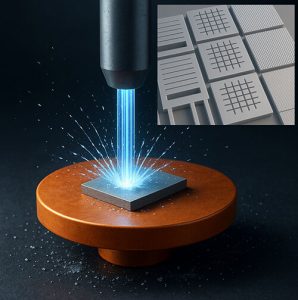
Functional Materials and Process Engineering Laboratory
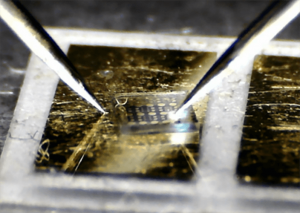
Thin-Film Electronics Laboratory
Ultra-High Frequency Engineering Laboratory
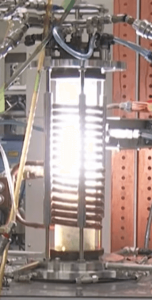
Environmental Power Engineering Laboratory
Vibration Power Generation Laboratory
Radio Wave Information Engineering Laboratory
Spacecraft Dynamics Laboratory

Basic Mathematics Laboratory
Mathematical Science Laboratory
List of laboratories in the Course in Information and Communication Engineering
Networks and Parallel Computation Laboratory
Artificial Intelligence Laboratory
Brain-Inspired Information Processing Laboratory

Information Security Laboratory
Image Information Processing Laboratory
Communication and Information Engineering Laboratory
Interface Device Laboratory
VLSI Systems Laboratory
Signal Processing Laboratory
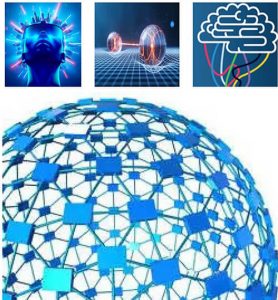
Intelligent Computation and Network Laboratory
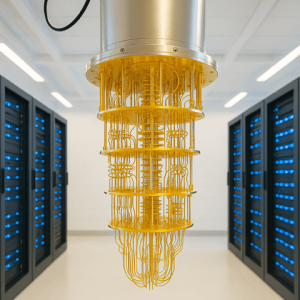
Quantum Information Theory Laboratory

Quantum Science and Technology Lab
Natural Language Processing Laboratory

Model-based/Data-driven Design Laboratory

Discrete Dynamical Systems Laboratory
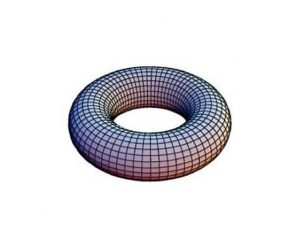
Number Theory Laboratory
Course in Electrical and Electronic Engineering
Functional Materials and Process Engineering Laboratory
Pioneering next-generation electronics with functional materials and advanced process technologies
Focusing on highly functional materials that surpass conventional electronic materials and the technologies to turn them into devices, we approach device development from both the perspectives of electronic materials and process technologies.
Faculty
Thin-Film Electronics Laboratory
Shaping the future with diamond electronics
Aiming to apply the unique and ultimate diamond semiconductor to power, quantum, space, and CO₂ resource conversion technologies, we conduct research and development from film growth to processing, device fabrication, and evaluation, integrating both experimental and theoretical approaches.
Ultra-High Frequency Engineering Laboratory
Challenging the limits of light and exploring its possibilities
Through the development of optical wireless power transfer systems, optical computing technologies, and quantum magnetic sensors, we conduct research aimed at creating next-generation photonics technologies.
Faculty
Environmental Power Engineering Laboratory
Research and development of high-voltage and plasma technologies for next-generation industrial innovation
By harnessing plasma, we are engaged in research and development on methods for large-scale production of functional nanomaterials used in next-generation secondary batteries, new manufacturing processes for semiconductor devices, and performance enhancement of next-generation power circuit breakers.
Vibration Power Generation Laboratory
Developing future power generation technologies that create energy from everyday vibrations
We are conducting research and development toward practical applications, including building theoretical models, broadening bandwidth, achieving multiband operation, improving output, reducing losses, and exploring materials.
Faculty
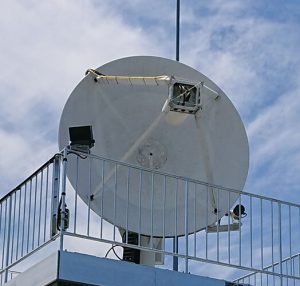
Radio Wave Information Engineering Laboratory
Exploring everything from our surroundings to outer space through electromagnetic waves
With the advancement of ICT, understanding complex electromagnetic environments has become increasingly important. The Radio Wave Information Engineering Laboratory employs electronic information and communication technologies to study electromagnetic environments ranging from our immediate surroundings to outer space.
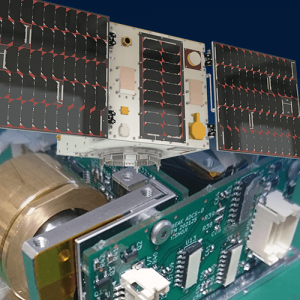
Spacecraft Dynamics Laboratory
Research and development of attitude control and flight systems for spacecraft
We study attitude control methods essential for spacecraft flying from the stratosphere to outer space and develop experimental flight systems to evaluate their effectiveness through space experiments.
Faculty
Basic Mathematics Laboratory
Research on meromorphic solutions of complex difference equations and their applications
We study the behavior of meromorphic solutions of complex differential or difference equations by means of value distribution theory and its application to ultradiscrete equations through Tropical Nevanlinna Theory.
Faculty
Mathematical Science Laboratory
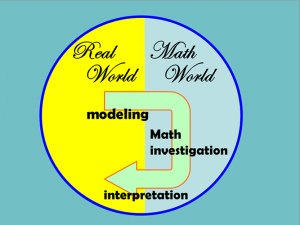
Controlling the real world by expressing phenomena in the language of mathematics
Mathematical science is a discipline that seeks to describe all phenomena through mathematics. By solving mathematical problems that represent real-world issues—ranging from organizational design to nanomaterials, fundamental optical phenomena, and DNA—it aims to provide solutions to practical challenges.
Faculty
Course in Information and Communication Engineering
Networks and Parallel Computation Laboratory
Theoretical exploration of optimal network design and utilization
We study various optimization problems related to optimal network design and utilization from theoretical perspectives such as graph theory and algorithm theory.
Faculty
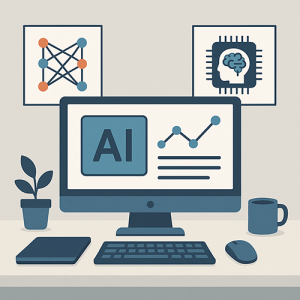
Artificial Intelligence Laboratory
Research and development of intelligent systems using artificial intelligence (machine learning and deep learning)
We work with various types of data, such as industrial and medical data, to build classification and prediction models using artificial intelligence techniques like machine learning and deep learning, and to develop systems based on these models.
Faculty
Brain-Inspired Information Processing Laboratory
Neurons, brain science, information processing, AI
Our laboratory is engaged in research aimed at constructing more accurate and advanced neuron models, elucidating the mechanisms of the brain and its information processing, and developing novel artificial intelligence systems.
Faculty
Information Security Laboratory
A secure digital society enabled by cryptography and information security
The Information Security Laboratory focuses on cryptographic technologies as its core and addresses a wide range of issues related to information security from multiple perspectives and with a broad outlook.
Faculty
Image Information Processing Laboratory
Development of image/video processing technologies using deep learning
Our research focuses on developing high-precision and efficient image/video processing technologies using deep learning, with applications including object recognition, image compression, medical image diagnosis, super-resolution, and image generation.
Faculty
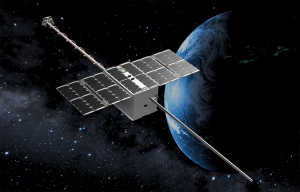
Communication and Information Engineering Laboratory
Big data processing on the ground and in space using advanced signal processing and communication technologies
By leveraging advanced signal processing, big data analysis, and edge computing technologies, we conduct research aimed at extracting knowledge from big data accumulated on the ground and exploring open questions in space science using spacecrafts.
Faculty
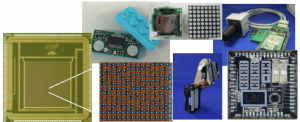
Interface Device Laboratory
User interfaces and interactions considered from the perspective of implementation methods
We design and implement computer devices that are easy to use for humans, considering them from the perspective of implementation methods. This approach is based on a broad concept of manufacturing, while also encompassing human sensory characteristics and semiconductor design.
Faculty
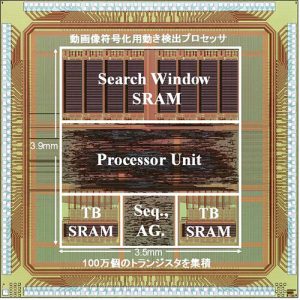
VLSI Systems Laboratory
Embedded systems for environmental recognition in autonomous driving
We research and develop algorithms, architectures, and implementation technologies for high-precision, low-power embedded systems that recognize surrounding vehicles and pedestrians for autonomous driving.
Faculty
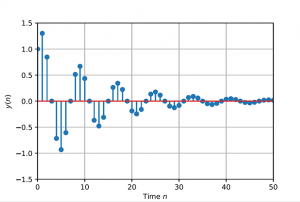
Signal Processing Laboratory
Theory and applications of signal processing technologies
We work on algorithms for statistical signal processing and applications of machine learning to signal processing.
Faculty
Intelligent Computation and Network Laboratory
Integrating computation and networking technologies to support future society
Aiming to realize the future networks from 3 to 30 years ahead, we conduct research and development in applications (metaverse, etc.), transmission and protection (quantum networks, wireless–wired integration, blockchain, etc.), and computation (big data, large language models, etc.).
Faculty
Quantum Information Theory Laboratory
Exploring the essence of quantum information processing based on quantum entanglement
From a statistical perspective that takes quantum superposition and quantum entanglement into account, we explore the possibilities and limitations of quantum information processing with quantum computers and related technologies.
Faculty
Quantum Science and Technology Lab
Controlling Quantum States, Designing the Future
We study quantum control from the perspective of quantum dynamics, focusing on the design and optimization of quantum algorithms.
Faculty
Natural Language Processing Laboratory
Research on natural language processing using machine learning
We conduct wide-ranging research on natural language processing, from fundamentals to applications, with a particular focus on approaches using machine learning.
Faculty
Model-based/Data-driven Design Laboratory
Building a mathematical optimization framework for high-speed fluid machinery in aerospace engineering
We perform high-precision numerical simulations of the interaction between shock waves and boundary-layer turbulence occurring on aircraft wings, and we develop control methods capable of efficiently suppressing this interaction.
Faculty
Discrete Dynamical Systems Laboratory
Design of pseudorandom numbers and source coding and their applications
Pseudorandom numbers are indispensable in secure communications, fintech, and random control, serving as one of the foundations that support the information society. Our laboratory conducts research on the design of pseudorandom numbers as well as source coding and their applications.
Faculty
Number Theory Laboratory
The Birch and Swinnerton-Dyer (BSD) Conjecture and Iwasawa Theory
The BSD Conjecture concerns elliptic curves, which play a central role in number theory. Our laboratory aims to deepen the understanding of elliptic curves and conducts research on the BSD Conjecture using approaches such as Iwasawa Theory.
Faculty